01
Base prep
The structural base is built like any city slab, compacted and air-entrained, because a decorative finish only lasts as long as what sits under it. Looks come second to the base.
Stone, brick, or bluestone looks in one continuous slab, colored and sealed to stand up to city winters and deicing salt, and easier to keep than pavers that shift.
Credibility comes from how it's built, not from promises. Here's the order of operations on every stamped & decorative concrete job.
The structural base is built like any city slab, compacted and air-entrained, because a decorative finish only lasts as long as what sits under it. Looks come second to the base.
Color is built in with integral color and release agents for depth, not a thin surface tint that fades under sun and weather over a couple of seasons.
Patterns are pressed while the concrete is still plastic so the texture reads sharp and even once it has set.
A sealer deepens the color and shields the finish from freeze-thaw and the rock salt and calcium chloride that get tracked across city flatwork all winter.
Stamped work needs resealing on a schedule, and sooner here because of the salt. We hand you that timeline before you commit, not after the first winter takes the shine off.
Most contractors vanish after the deposit. We pick up the phone, show up when we say, and stand behind the work after the truck leaves. The follow-through is the difference.
A foreman we know runs your job and a vetted crew does the work, managed by Lucky's, one company accountable from the first call to the final walkthrough.
COI and lien waivers on file before we break ground. The documentation that lets commercial clients pay and gives homeowners peace of mind.
Prepped subgrade, reinforced and mixed to spec for the job, and proper curing. We build credibility through the process, not promises. On stamped & decorative concrete, that starts with base prep.
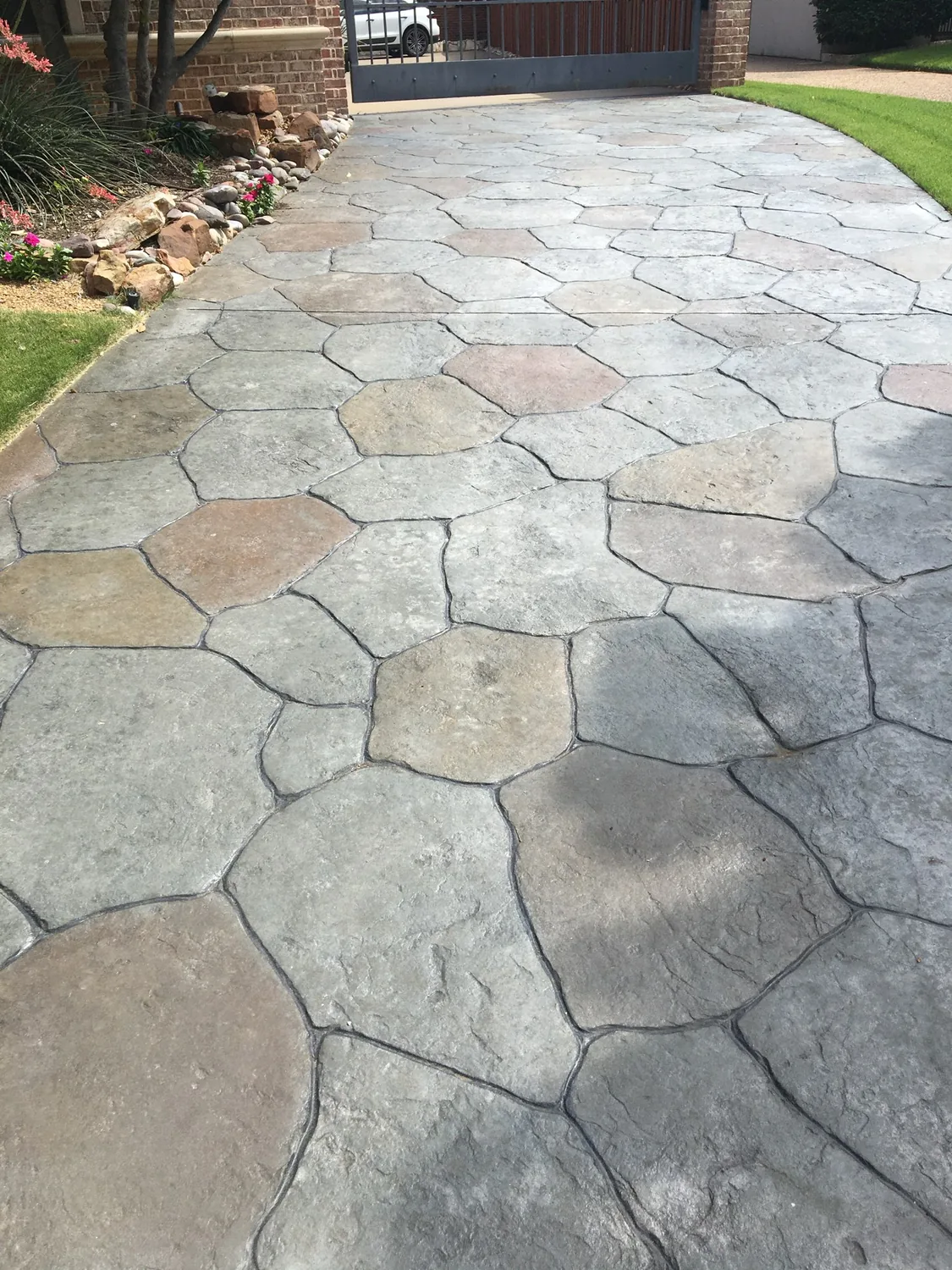
Stamped concrete is poured concrete pressed with patterned mats while it is still plastic and colored to read like stone, brick, slate, or bluestone, giving the look of pavers in one continuous slab with no joints to weed or shift out of line.
Stamped and decorative work runs higher than standard flatwork, and in the city the base still has to be air-entrained and the access still has to be worked through tight lots. Pattern complexity, color layers, sealing, and access all move the number, and it lands above the national average here. We price it after seeing the space, not blind over the phone.
The base is built like any slab, air-entrained and jointed. The finish is what needs attention: freeze-thaw and deicing salt wear on the sealer and color, so we reseal on a schedule. Pavers, by contrast, tend to heave and shift on freeze-thaw ground and open gaps for weeds.
Stone, slate, brick, bluestone, and plank patterns in a range of tones that suit brownstone and rowhouse settings. We bring samples and match the finish to the building and any existing hardscape.
Plan on resealing every couple of years, sooner on areas that take direct sun or a heavy dose of winter salt. We give you a straight maintenance schedule so the color holds instead of washing out.
It can be smoother than a broom finish, so for walkways and any path that sees ice we mix a non-slip additive into the sealer. We point out where that matters for your layout before we seal.
Stamped concrete usually installs for less than pavers, has no joints to weed, and won't shift the way pavers do on freeze-thaw ground, though it does need periodic resealing. We lay out the trade-offs so you choose with eyes open.
You'll hear back from a real person, usually the same day. No call center, no runaround, no chasing us down.
Booking up fast this season. Or call (646) 663-8824