01
Access and layout first
Many city rear yards are reached only through a building or down a narrow side run. We plan how mix, forms, and spoil move in and out before a shovel goes in the ground, so the job fits the lot.
A rear yard that finally works as outdoor room. We pour patios built for the city's freeze-thaw winters and tight access, pitched to drain and cured to last through the seasons.
Drag the handle to reveal the finished pour.
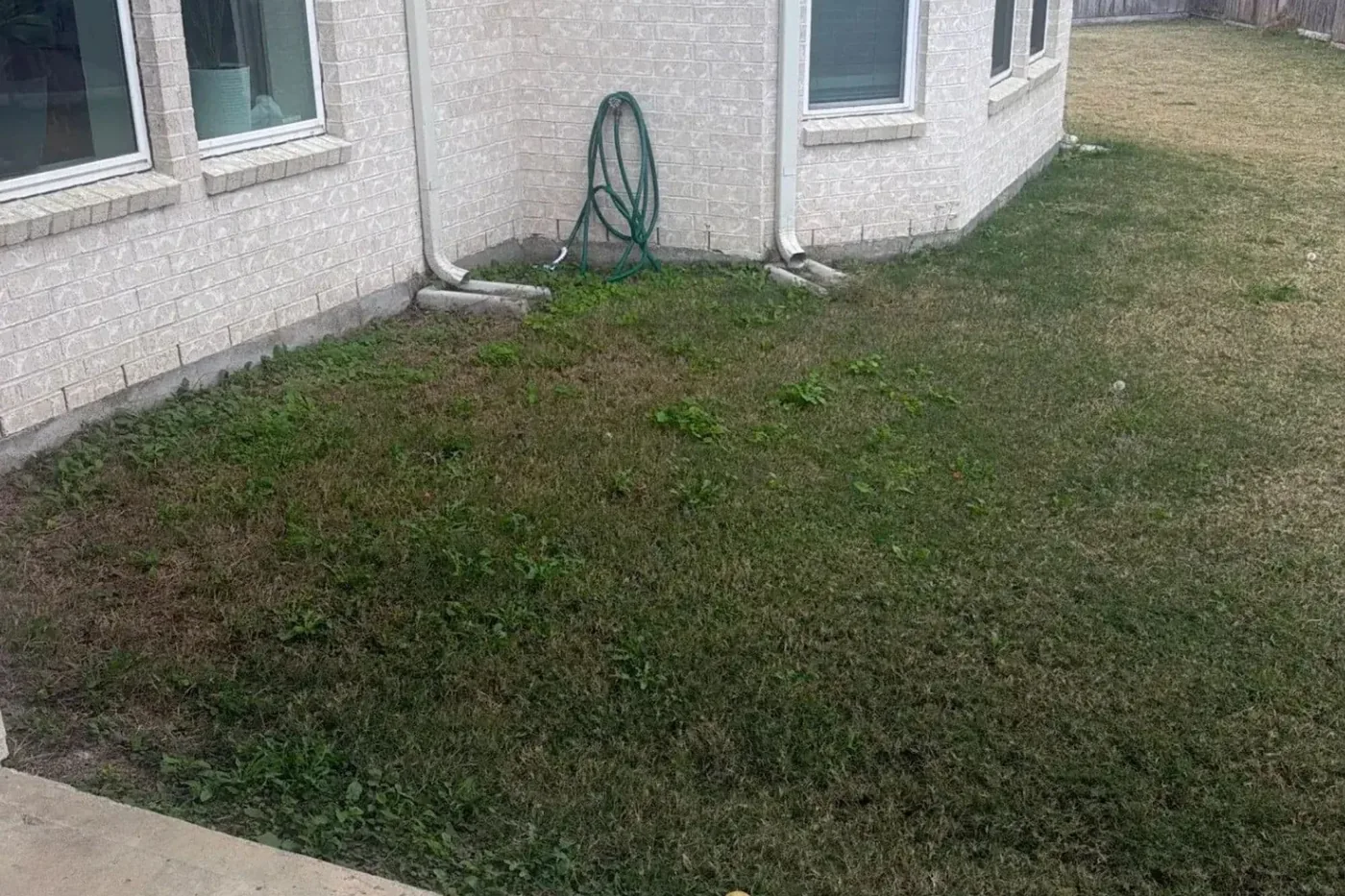
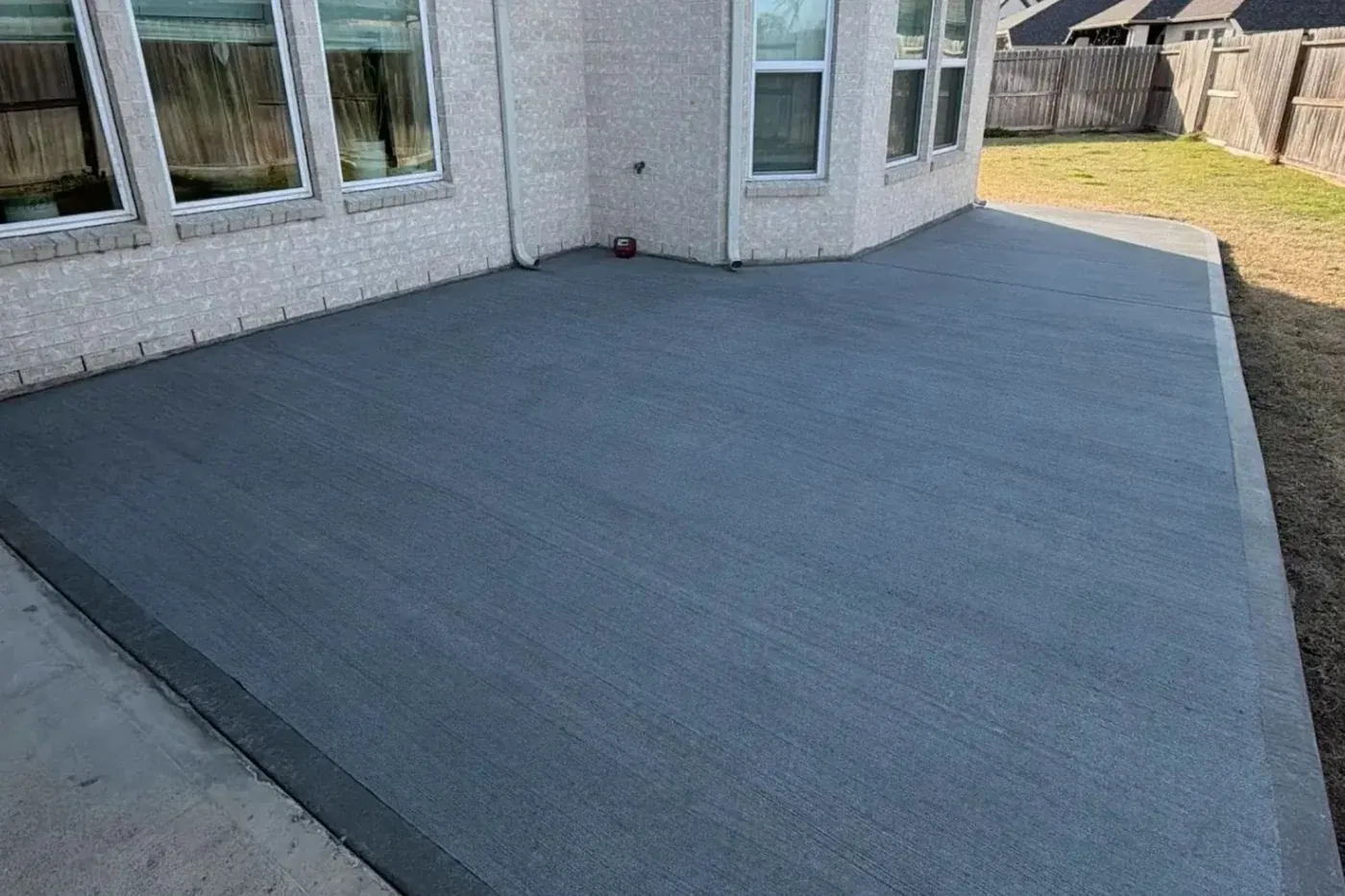
Credibility comes from how it's built, not from promises. Here's the order of operations on every concrete patios job.
Many city rear yards are reached only through a building or down a narrow side run. We plan how mix, forms, and spoil move in and out before a shovel goes in the ground, so the job fits the lot.
We dig out, compact, and set a clean base so the slab bears evenly. A backyard that holds water all winter is a backyard that scales and heaves, so the base does the quiet work.
The surface is pitched to carry rain and snowmelt off and away from the building wall, since water that sits against a foundation and freezes is what does the damage.
We pour an air-entrained mix made to take Northeast freeze-thaw and the road salt that tracks into the city, so the surface resists scaling year over year.
Joints are cut to a plan so the slab moves along set lines, then we cure it to gain strength evenly and seal it to slow salt and water at the surface.
Most contractors vanish after the deposit. We pick up the phone, show up when we say, and stand behind the work after the truck leaves. The follow-through is the difference.
A foreman we know runs your job and a vetted crew does the work, managed by Lucky's, one company accountable from the first call to the final walkthrough.
COI and lien waivers on file before we break ground. The documentation that lets commercial clients pay and gives homeowners peace of mind.
Prepped subgrade, reinforced and mixed to spec for the job, and proper curing. We build credibility through the process, not promises. On concrete patios, that starts with access and layout first.
Concrete in the five boroughs runs above the national flatwork average, and for real reasons: getting mix and crews into a rear yard through a building or a narrow lot, hauling out the old slab in a dense neighborhood, parking and disposal, and city labor all add up before the first yard is poured. We lead with those drivers rather than a number we would have to walk back, because price tracks square footage, finish, access, and how much base work the yard needs. We price it after seeing the space, never a low figure over the phone we can't stand behind.
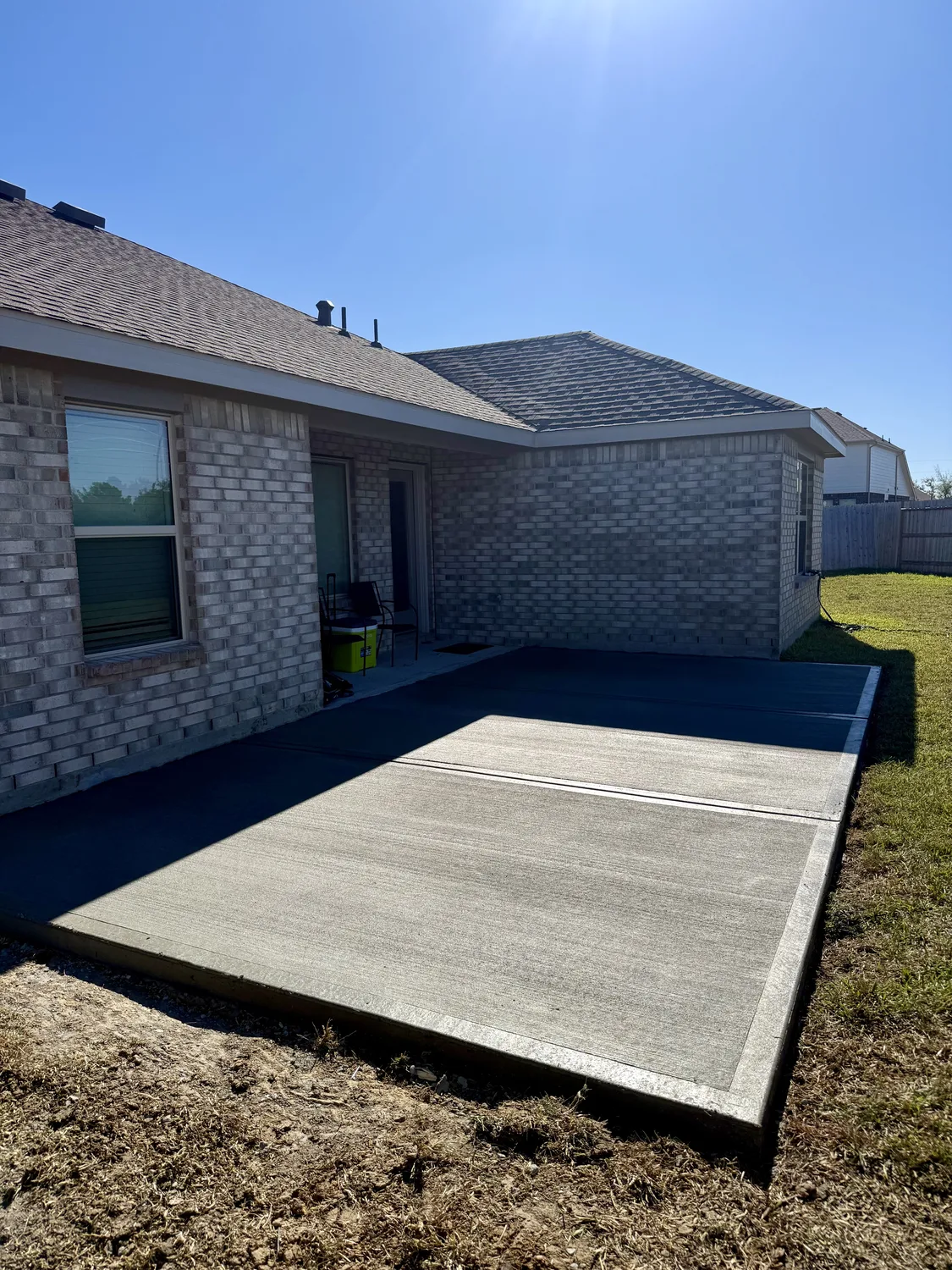
A residential patio is poured on a 4-inch slab, which suits foot traffic and furniture, and we add thickness where something heavier, like a hot tub, will sit on it.
Surface scaling in the Northeast usually comes from freeze-thaw working on concrete that wasn't air-entrained, made worse by rock salt and calcium chloride at the surface. We pour an air-entrained mix, slope the yard to drain, and seal the finish. No one can promise concrete never moves, but we build so it moves where we planned for it.
Often yes, but it depends on the path. Some yards take a buggy or a pump line through the building, others are wheelbarrow-and-hand work. We look at the access on the estimate and tell you straight what the lot allows and how that shapes the plan and the price.
Broom is the practical choice: textured for grip when it's wet or icy and easier on the budget. Stamped gives the look of stone or slate but needs resealing more often, because city winters and deicing salt are hard on a decorative finish. We walk both against how the yard gets used.
Yes. We set the pitch so rain and snowmelt run off the slab and away from the building rather than ponding. Standing water that freezes overnight is what lifts edges and opens joints.
You'll hear back from a real person, usually the same day. No call center, no runaround, no chasing us down.
Booking up fast this season. Or call (646) 663-8824